

Post-Service Advice
Keep Your Bike Running Smoother For Longer Between Services
Your bike has just been serviced, so it should be at its best – let’s keep it that way!

Don’t “Fix and Forget” – A few simple habits will keep your bicycle safer and smoother for longer.
Here’s some of the most important and useful advice we’ve given our customers over the last 15 years:
- Test ride
- Bed in your pads
- 15-second pre-ride check
- Tyre pressure
- Gear selection
- Cleaning and lubrication
- Storage
- Running adjustments
- Check for chain wear (TOP TIP!)
- Plan ahead
1. Test ride!
Take your bike out for a ride as soon as you can – be critical of how it feels, listen for noises etc.

You should feel a big difference from before the service. New cables can take time to settle so needing a small tweak in the first week or two is fairly normal and we can usually help with this over the phone!
If anything feels off, big or small, get in touch straight away on 01564 660652 or message us on WhatsApp. The longer you leave it the more difficult it is to distinguish a post-service issue from normal wear and tear.
2. Bed in your pads
Don’t forget to bed in your new brake pads if you have them. We will have started this process during our test ride, but please complete the proper “bedding in” procedure (especially for disc brakes) before your first ride. Without doing this you risk damaging your new pads or rotors from the start.
Here’s a great video by GCN on why and how to properly bed in your new disc brake pads.
3. 15-second pre-ride check
Before every ride, get used to quickly running through this 15 second A-B-C-D check:
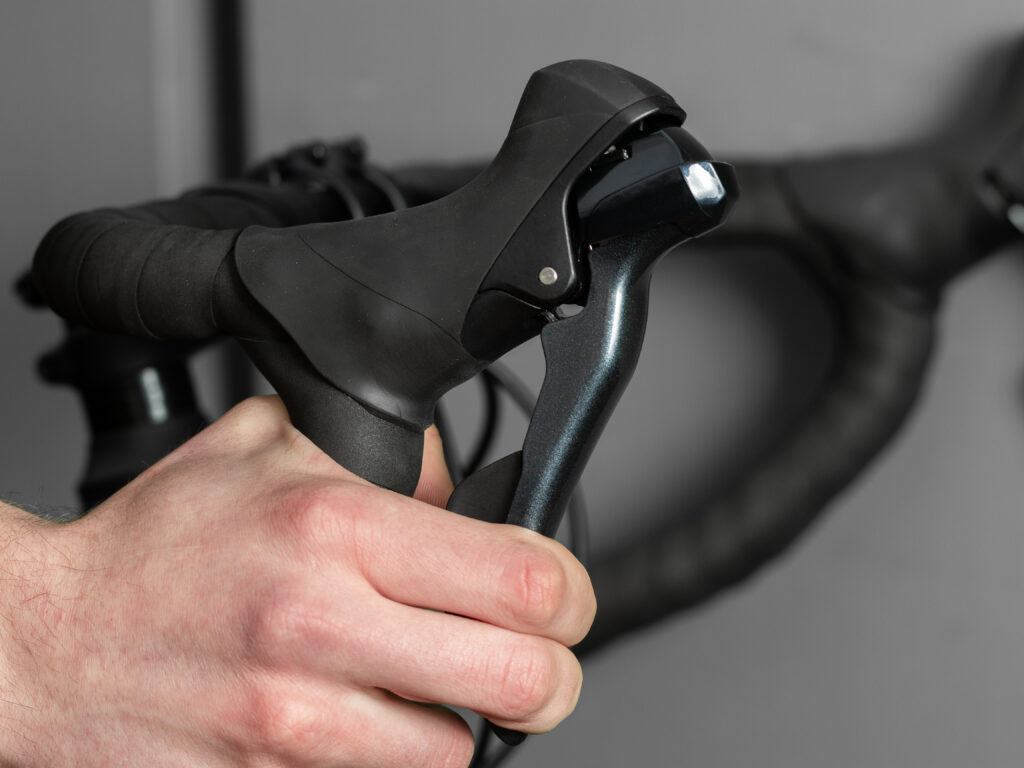
- Air: squeeze the tyres, check the pressure and look for cuts or embedded glass/thorns etc.
- Brakes: squeeze both levers. They should feel firm, not spongy, and not too close to the handlebars. Pads should have plenty of material left.
- Chain and cranks: the chain should look clean and lightly lubed, and should run freely when pedalled backward. The cranks shouldn’t wobble side to side.
- Derailleurs: The rear derailleur (gear mech) should be straight and aligned perfectly parallel with the wheel. If it looks wonky avoid the lowest gears (largest cogs) and get it aligned ASAP!
Trust your instincts, your bike should be almost silent while riding. If something looks/sounds/feels off then it probably is!
4. Tyre pressure
Correct pressure is the cheapest way to improve how your bike rides. But tyres will go down over time..

- All tyres lose air gradually, so check/top-up pressure at least monthly.
- Check for any large gashes/embedded glass etc when you do this.
- The recommended pressure range is different for every tyre and is printed on the sidewall.
- Run lower for wet or rough surfaces and higher for smooth roads, fast riding.
5. Gear selection
Smoother shifting technique will protect your drivetrain components.
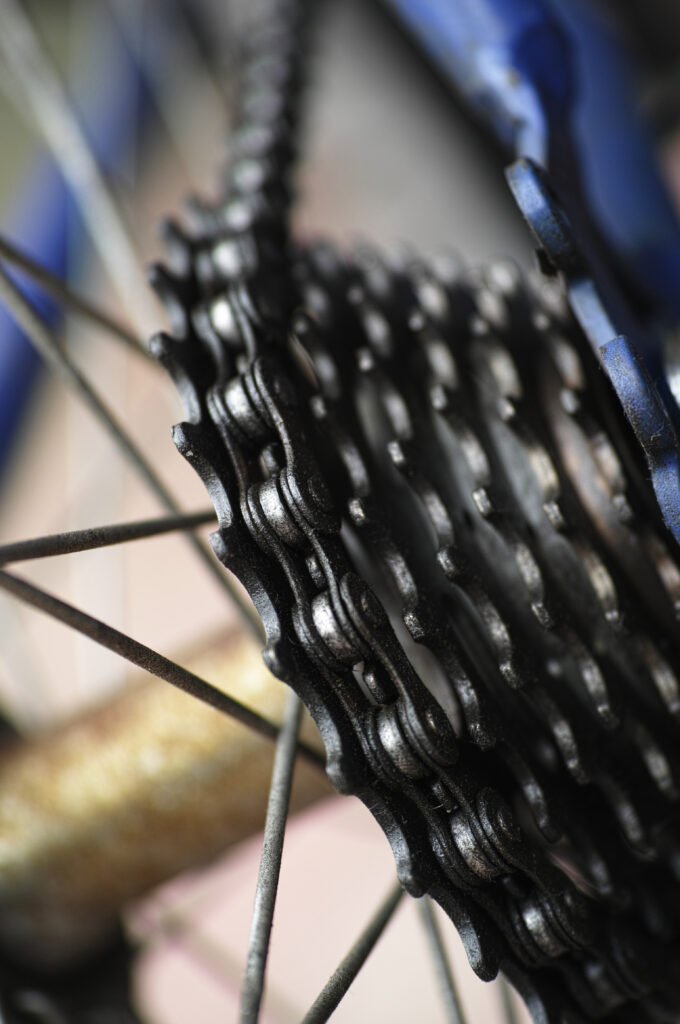
- Use the lowest (easiest) gear you can bear to be in. Heaving along in top gear is harder on your knees, and will wear out the chain more quickly.
- Change down to your lower gears early, before a hill or stopping at a junction.
- Ease off the pedal pressure as you shift (but keep them spinning). This puts less strain on the derailleurs, chain and sprockets, and makes for a faster, smoother shift overall.
- Avoid cross-chaining: Keep the chain running as straight as possible – don’t pair the outer front chainring with the inner most rear sprocket, or vice versa. It adds unnecessary wear to the drivetrain over time and the same gear ratio can usually be achieved with a straighter chain/cog selection.
6. Cleaning and lubrication
A clean bike lasts longer and makes problems easier to spot.
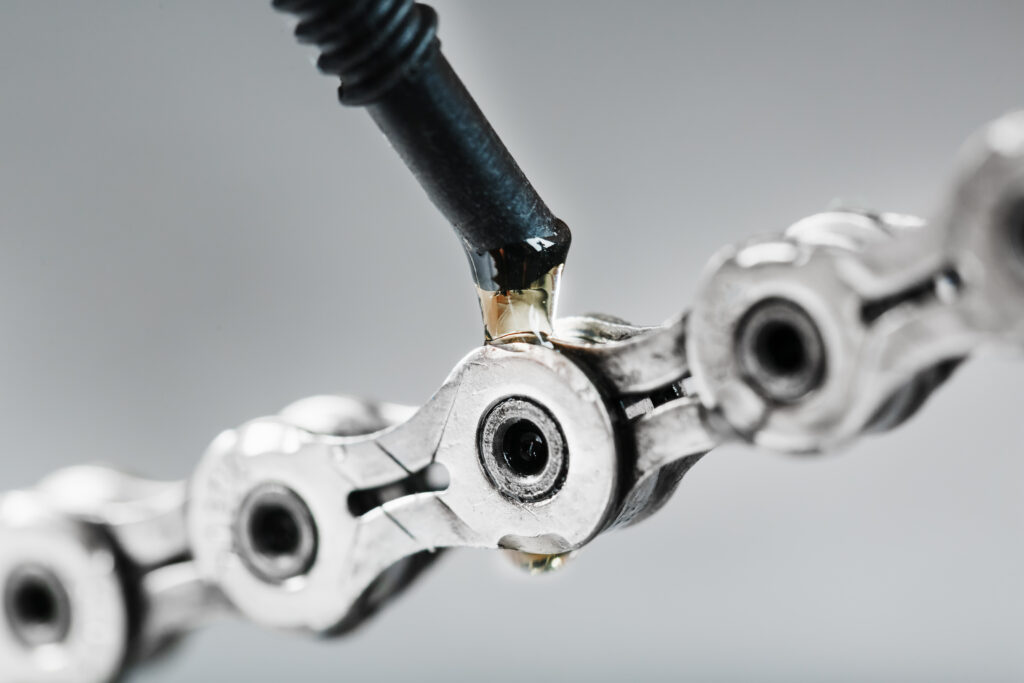
Chains have a limited lifespan – extend it by cleaning regularly.
- Use a clean rag with some spray lube on (eg WD40) for cleaning the chain and cogs – it works great on frame, forks and wheels too!
- Avoid pressure washers – they can force grease out and water into bearings and chain rollers.
- Keep cleaning products and lube strictly away from brake discs and pads.
- Lube the chain lightly, leave it a few minutes to soak in, then wipe off any excess.
- Never use WD40 or other spray lubes to lubricate your chain.
- Use wet lube for damp conditions and dry lube for dry weather. Re-lube after wet rides, or whenever the chain looks/feels/sounds dry.
7. Storage
Much of the rust damage we repair/replace happens silently while you’re asleep!

- Mud holds moisture, and moisture leads to rusty, seized parts.
- Try to clean/dry and re-lube the chain and derailleurs (especially the front one) before putting it away on wet days.
- Use it or lose it! – Go through all the gears on every journey to keep the derailleurs functional.
- Occasionally remove/grease your seat post to stop it seizing in place.
- If you don’t have time for any of this, then budget a little extra at your next service for labour and parts required for cleaning/repair/replacement of corroded parts.
8. Running adjustments
It’s worth learning some basic adjustments you can make as things start to settle. We’ll be uploading some how to videos soon!

- Learn how to adjust your cable brake tension (check for worn pads first).
- Use gear cable barrel adjusters to fine tune your gear indexing (check for hanger alignment first).
- Avoid messing with derailleur limit screws – a common mistake (they probably don’t do what you think they will!).
- Light spray-lube in your gear and brake cables if they feel a bit stiff.
9. Check for chain wear (TOP TIP!)
We’re slightly evangelical about replacing chains on time, because it’s the best protection for the rest of your drivetrain components.
A worn chain slowly grinds down your cassette and chainrings – turning a cheap fix into an expensive one needing more advanced tools. It’s all very avoidable if the chain is replaced in time. We check for chain wear at every service, but can’t undo the damage if it wears out between visits.
If you don’t already have one, get a chain-wear checker. It’s inexpensive, lasts for years, and will save you money. Check the chain every month or so, and if the checker drops in, book it in for a new chain, or replace it yourself (see our how to for instructions!)
10. Plan ahead
- Plan your monthly DIY check/maintenance in advance for when you know you have a spare hour or two, maybe on a weekend.
- Make sure you have your basic toolkit/cleaning gear stocked up.
- Put some money aside each week or month for replacing running parts like the chain, pads, cables, even wheels (if your bike has rim-brakes).
Why all this matters…
Your bike doesn’t care how far you feel like you’ve ridden on it (eg just to the shops etc), the wear associated with riding a bike just accumulates, mile by mile, regardless.
Accidents/failures can happen at any speed, at any location. Don’t de-prioritise you or your family’s safety just because you “don’t ride on the road” or “don’t go very fast”.
You’ll get used to the deteriorating condition of your bike as gradually as it happens, meaning you may not notice your brakes are useless in an emergency until it’s too late.
When to get in touch
Call us straight away if you experience any post-service niggles on your first ride, or if you’ve noticed:
- Weak or noisy brakes/lever pulling all the way to the handlebars.
- Noisy, chattering or crunching chain.
- Loose or buckled wheels, headset or bottom bracket bearings
- Cracked or bulging tyres.
You’ll always be pleasantly surprised by how it feels again after a bit of TLC.
Call our workshop 01564 660652 or message us on WhatsApp. There’s no such thing as a silly question.
Mailing List
Contact & Booking
Booking Form
Social Media